Obelisk
A multi-tenant SEO and answer-engine (AEO) platform for WordPress: it audits sites, drafts AI fixes, applies them live in one click, and scores how ready each site is to be cited by AI.
The problem
Every SEO tool is good at producing lists. Run an audit and you get a hundred issues: missing meta descriptions, thin titles, images with no alt text, keywords stuck on page two. The report looks impressive, then almost none of it gets fixed. Someone still has to log into WordPress, find the page, edit the field, and save, a hundred times across a dozen client sites.
That gap, between knowing what is wrong and it being fixed on the live site, is where most SEO value dies. Obelisk was built to collapse that loop.
What it does
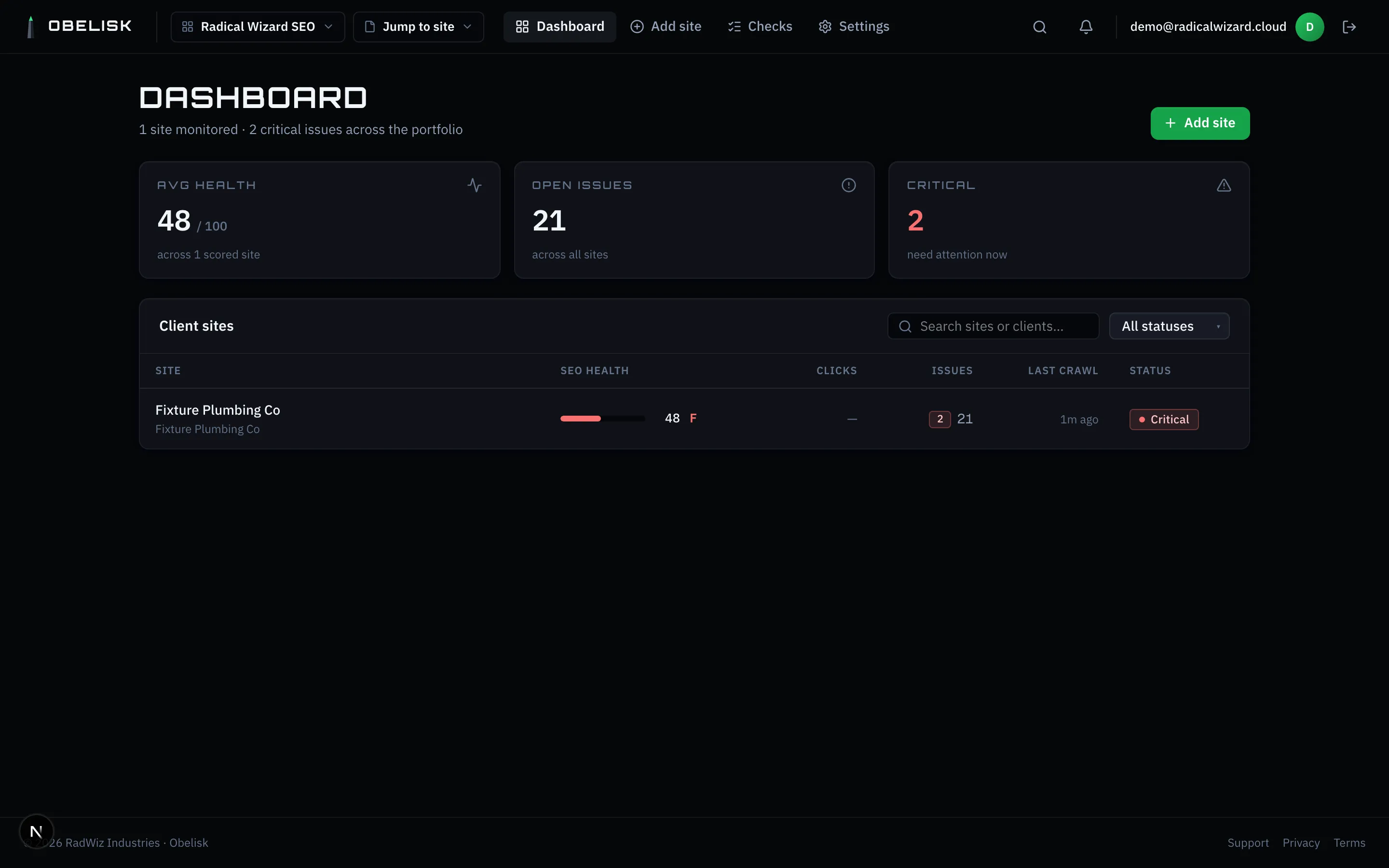
Obelisk is a multi-tenant agency dashboard for managing SEO and answer-engine visibility across many WordPress client sites at once.
- Connect any WordPress site in under a minute over the REST API, with nothing to install to get started. Credentials are encrypted at rest.
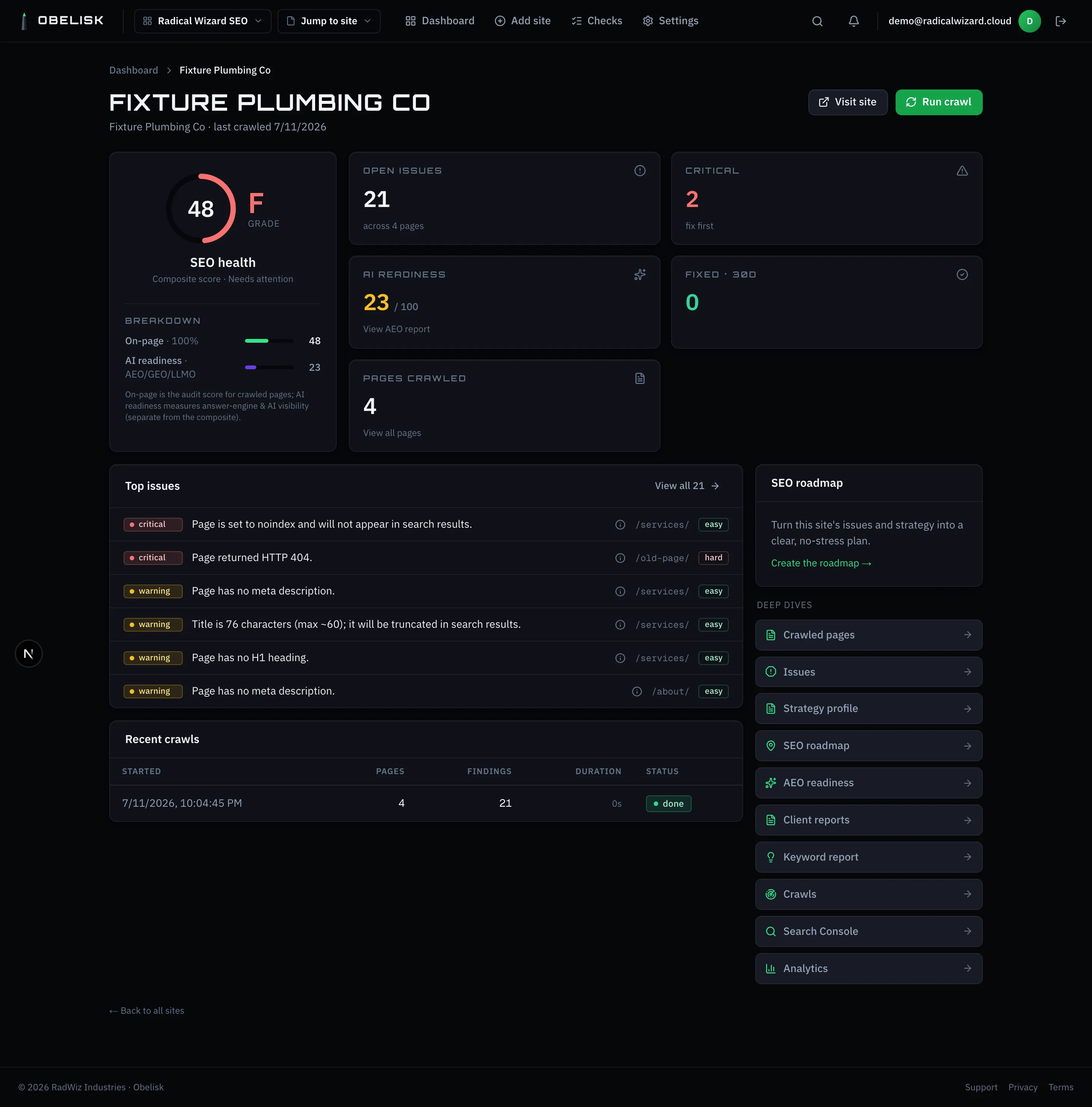
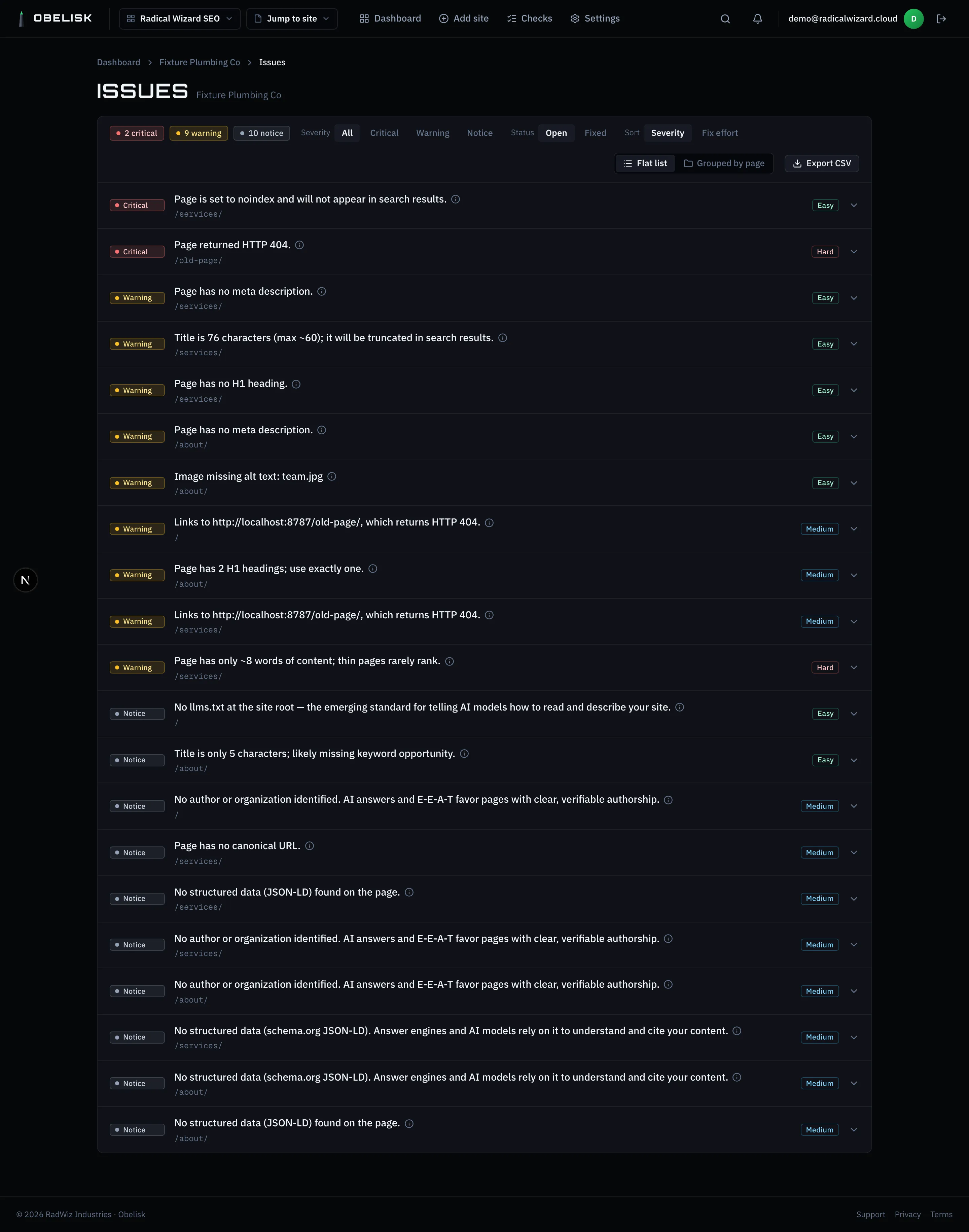
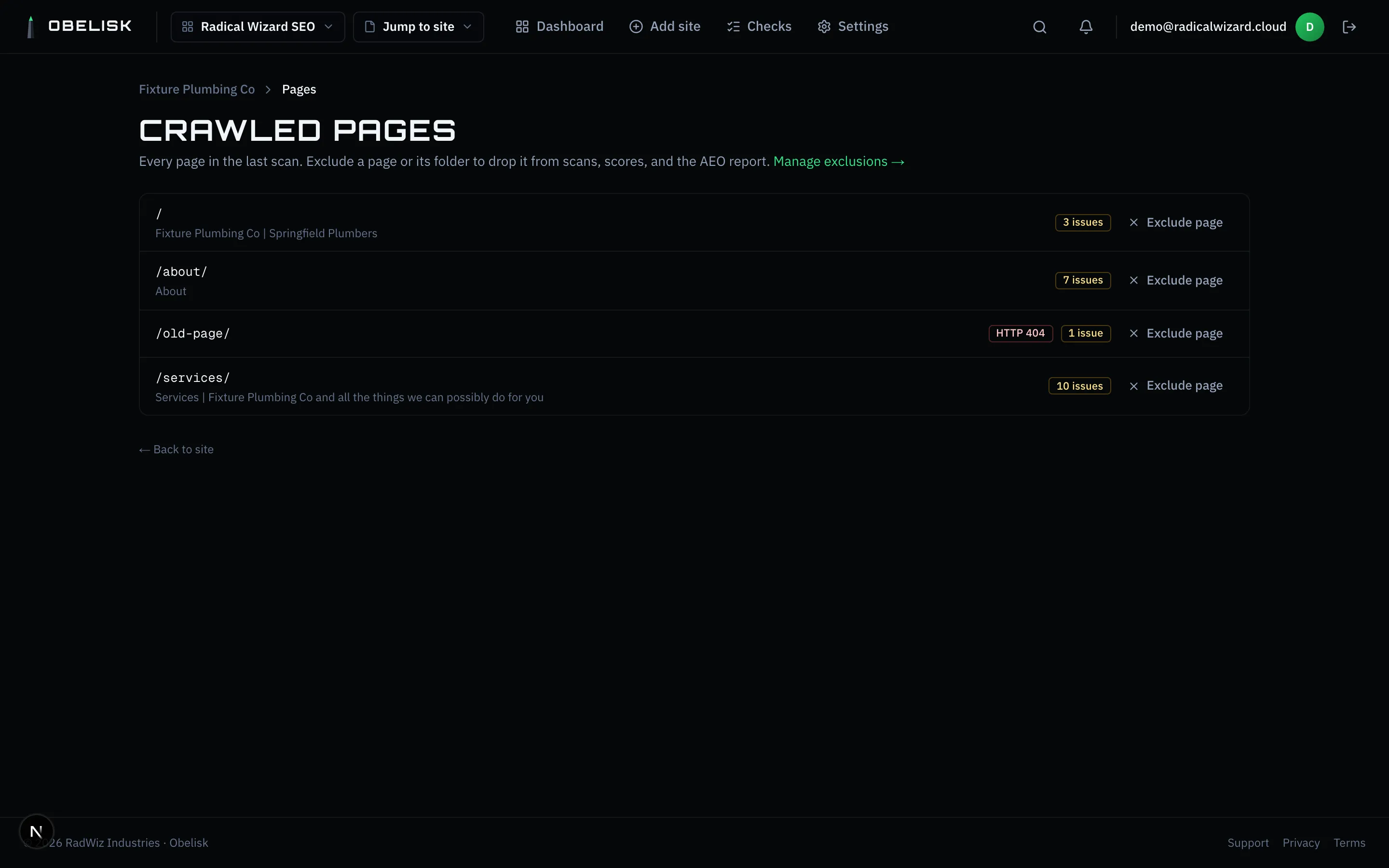
- Crawl and audit automatically. A background worker discovers pages, fetches the rendered front end, and runs a rules engine that flags on-page SEO and copy problems. It is Beaver Builder aware, so each issue deep-links to the exact page-builder module that owns it.
- Track every finding through open, fixed, and regression states across crawls, so the dashboard shows real progress instead of re-listing the same problems.
- Generate and apply AI fixes. For any copy issue it drafts a fix with the Claude API, shows the rationale, and on approval writes it back to WordPress, then re-checks the page so the fix confirms itself.
- Turn keyword data into content. It syncs Google Search Console and GA4, finds striking-distance and losing-traffic opportunities, and can publish a full content brief to WordPress as a draft, never live.
Built for answer engines, not just rankings
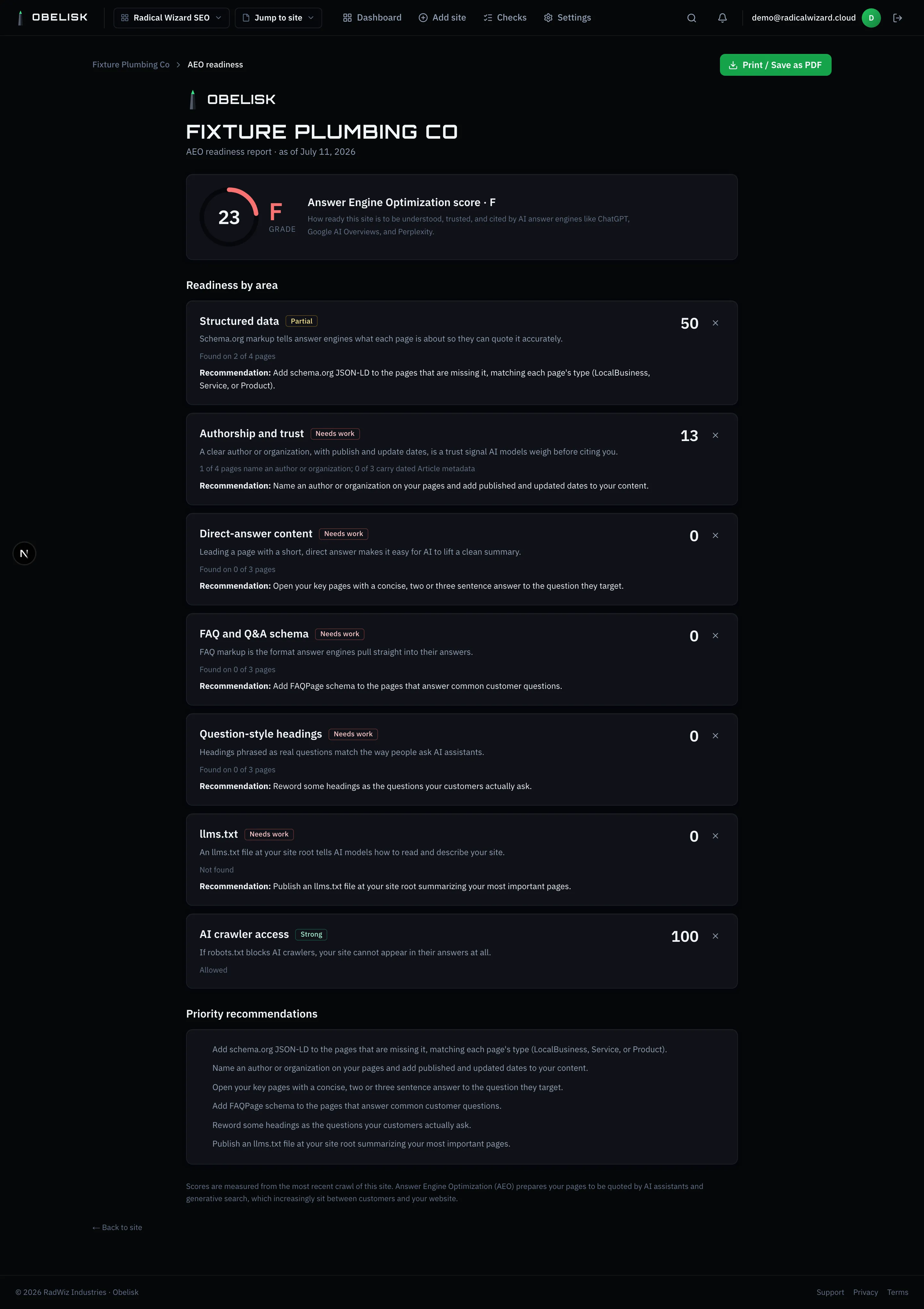
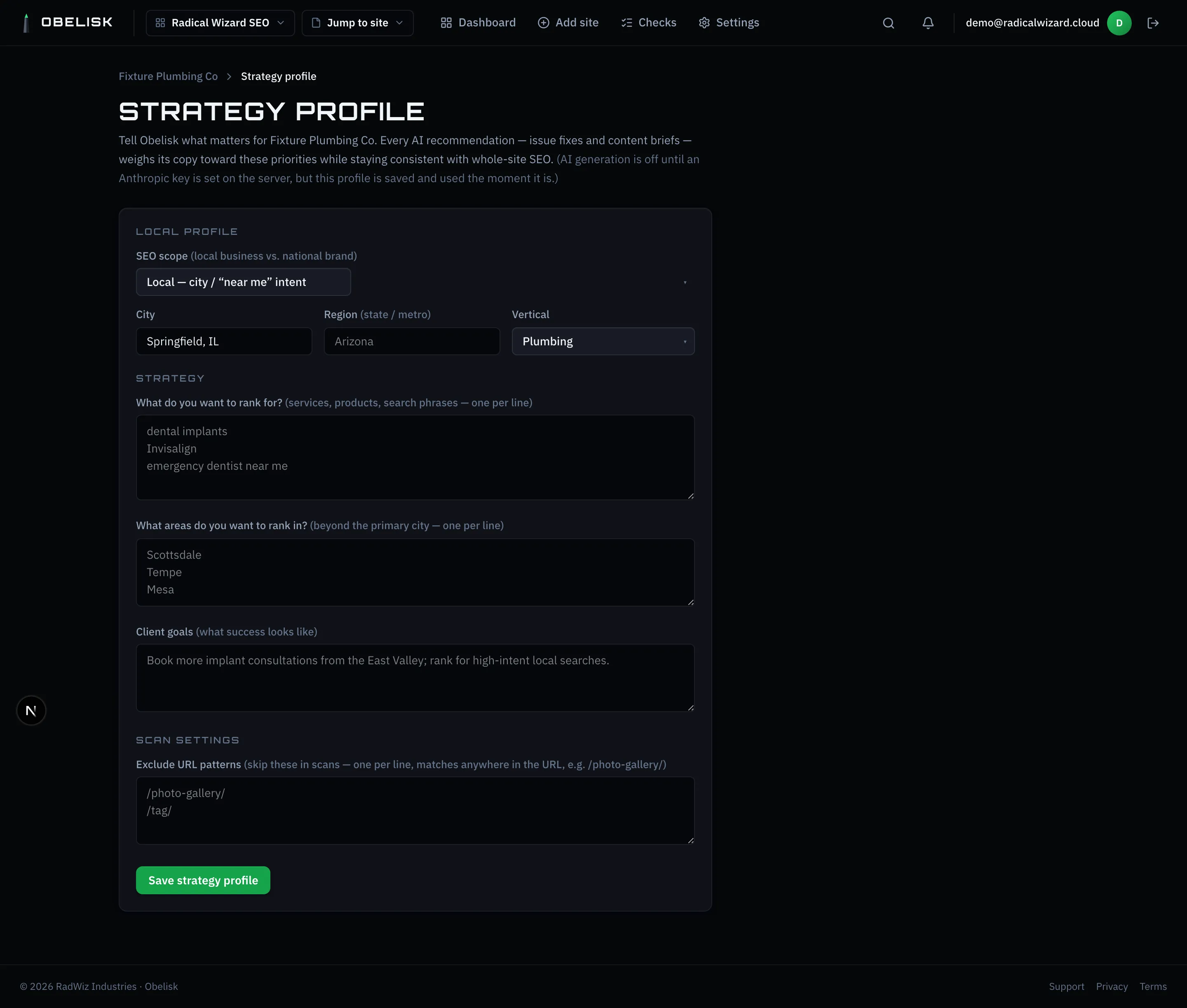
Search is no longer only blue links. Obelisk includes a dedicated module that scores how ready a site is to be cited by AI answer engines (AEO and GEO) and turns that score into a client-facing readiness report. It weighs the same things answer engines reward: clear and quotable answers, clean heading structure, entity clarity, and structured data. An AI SEO roadmap then folds those answer-engine signals in with classic crawl data and Google metrics into one prioritized plan, so improving traditional rankings and improving how often AI cites a page become the same workflow instead of two separate projects.
How the fix loop works
The most important design decision is that a fix never surprises anyone.
- The crawler finds an issue and attributes it to a specific page and module.
- A specialist clicks Generate AI fix. Claude drafts the replacement copy with a short explanation of why it helps.
- The specialist reviews and accepts. Nothing has changed on the live site yet.
- Obelisk writes the change to WordPress. Image alt text goes through the standard media API; SEO titles and meta descriptions go through the Obelisk Connector companion plugin, which speaks to Yoast, Rank Math, and SEOPress.
- The page is re-crawled automatically and the issue flips to fixed on its own.
Every number in the dashboard links back to the exact place it came from, whether that is the live page, the WordPress editor, or the underlying Google property. The guiding rule is “every number is a door.”
Under the hood
Obelisk is a modern TypeScript application in three cooperating pieces: a server-first Next.js App Router web app, with the audit rules kept as a pure, framework-free module that is fast to test; a decoupled BullMQ worker on Redis that owns crawling, auditing, and Google syncs so the dashboard stays responsive; and a multi-tenant Postgres schema with Drizzle, where agencies own clients, clients own sites, and sites own pages, crawls, and issues. The whole system runs in Docker behind Traefik on a self-hosted VPS.
Stack: Next.js (App Router, TypeScript), React, Postgres and Drizzle, BullMQ and Redis, WordPress REST API, Claude API, Docker and Traefik.
Status
Solo-built, actively developed, and running live in production. Shipped and in daily use: site connections, the crawler and audit engine, the full issue lifecycle, AI fixes with one-click apply, Search Console and GA4 sync, the keyword opportunity engine, content briefs, the answer-engine readiness score, AI roadmaps, the deliverables tracker, and multi-agency tenancy.
On the roadmap: white-label client reports with scheduled monthly delivery, a read-only client portal, deeper technical-SEO checks like schema generation and citation tracking, and a security-monitoring layer.
Related reading
The thinking behind Obelisk’s answer-engine work is in what answer engines actually cite, on how to structure pages so AI search quotes them.
Inside the product
A look inside Obelisk
Questions
FAQ
What is Obelisk?
Obelisk is a multi-tenant SEO and answer-engine-optimization platform built by Brian (Radical Wizard). It audits WordPress sites for SEO and copy issues, drafts AI fixes for each one, applies accepted fixes to the live site in one click, and scores how ready a site is to be cited by AI answer engines.
How does Obelisk apply fixes to WordPress?
Obelisk drafts a fix with the Claude API and, once a human accepts it, writes it back to WordPress. Image alt text goes through the standard WordPress media API, while SEO titles and meta descriptions go through a lightweight companion plugin, the Obelisk Connector, which works with Yoast, Rank Math, and SEOPress. The page is then re-crawled so the fix confirms itself.
Does Obelisk help with AI answer engines (AEO and GEO)?
Yes. Beyond classic SEO, Obelisk scores how ready each site is to be cited by AI answer engines and turns that into a client-facing readiness report. Its AI roadmap folds those answer-engine signals in with crawl data and Google metrics, so improving rankings and improving how often AI cites you are one workflow, not two projects.
Do I need to install a plugin to connect a site?
No. Obelisk reads a site over the WordPress REST API using an Application Password, so you can connect and audit a client in under a minute with nothing to install. A lightweight companion plugin is only needed for the deepest write operations, like updating SEO meta on Yoast, Rank Math, or SEOPress.